
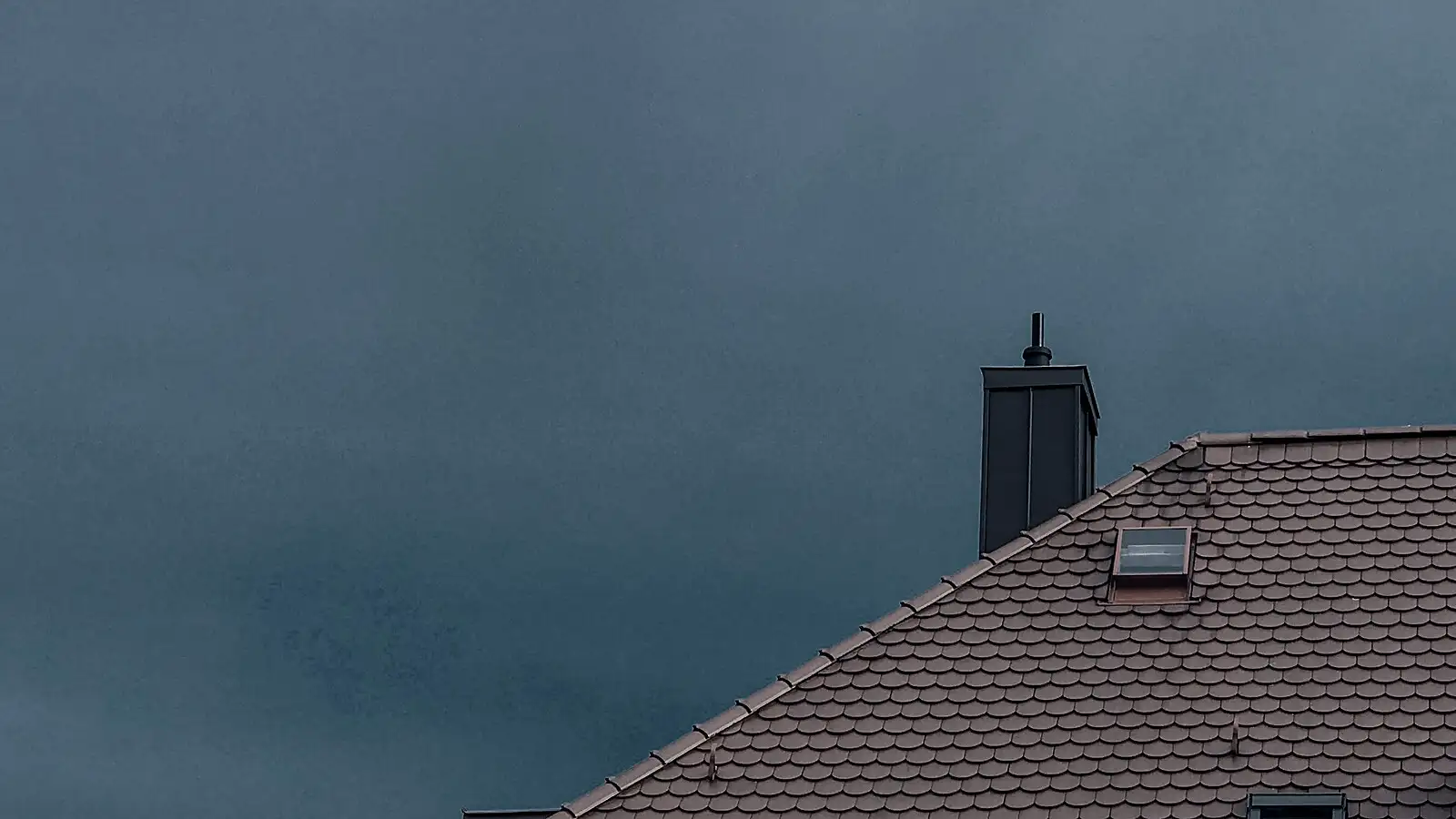
Roof replacement in Forked River
Lacey Township runs 83.25 square miles from Barnegat Bay back into the Pine Barrens, with about two thirds of it protected Pinelands west of the Garden State Parkway and better than ninety-five percent of the housing packed into the strip east of it. The bay side went up first as lagoon and waterfront lots through the 1960s and 1970s, mostly single-story. A second wave of larger houses and big-box retail arrived through the 2000s, so two building eras sit a few streets apart with nothing in common on the roof.
What ends a roof in Forked River
A lagoon lot has no shelter at the corner
The lagoon streets were dug into the bay front so that every house has water at the back. That also means every house has an unbroken run of open water on one side and no building to break the wind. Uplift concentrates at the corners of a roof and along the rake, which is exactly where these houses lose shingles first.
Two building eras, one township
A 1968 bay bungalow and a 2005 two-story a few blocks inland need different roofs and different conversations. The older stock is low, small and often already recovered once. The newer stock is taller, steeper and more complicated. Advice that works for one is close to useless for the other, and both get quoted here as though they were the same house.
Salt spray off the bay, every day
It does not take a storm. Onshore wind carries salt off Barnegat Bay onto the roofs behind it constantly, and salt draws moisture out of the air and holds it against the shingle surface. The practical effect is a roof that stays damp longer between rains than an identical roof ten miles inland, and ages accordingly.
The Pinelands side has the opposite problem
West of the Parkway the exposure drops away and the tree cover takes over. Those roofs are not fighting wind so much as shade, needle litter in the valleys and limbs over the roof plane. Same township, same building code, and the reason one roof failed will tell you nothing useful about the other.
When patching stops being the answer
- The covering is at or past twenty years — where Ocean County carriers start looking.
- Two applications are already on the deck, so no third is allowed and the next roof is a tear-off.
- Granules in the gutters and bare asphalt showing on the water-facing slope.
- Tabs creased or unsealed across a whole run rather than in one spot.
- You have paid for the same slope twice.
How a Forked River roof comes apart
On the bay side the specification is about the perimeter: how the starter is run at the rakes and eaves, how the ridge is capped and fastened, and what edge metal holds it all down. West of the Parkway the same money is better spent on valley detail and attic ventilation, because that is what actually ends those roofs.
What a replacement involves
What varies house to house is stage two, once the deck is finally visible. The full walk-through is on the roof replacement page; wind classification and fastening are on the asphalt shingle replacement page.
Services available in Forked River
- Roof ReplacementDown to the deck and back up, on shore roofs that are past their last patch.
- Storm Damage Roof ReplacementNor'easter uplift, lost courses and the claim that follows.
- Asphalt Shingle ReplacementWind classes, fastening and coastal spec for a shore roof.
- Roof Inspection ReportSlope-by-slope findings in writing, dated, for a carrier or a buyer.
Areas covered in Forked River
Contractors cover Forked River and the surrounding area, including Forked River, Lanoka Harbor, Forked River Beach, Bamber Lake, Sunrise Beach, Cedar Creek, Good Luck and Lacey Harbor.
ZIP codes: 08731, 08734.
Frequently Asked Questions
- How do I find the design wind speed for my address?
- New Jersey no longer publishes a statewide table. Bulletin 19-1 from the Department of Community Affairs points to a site-specific lookup instead, and it warns in plain terms that entering only a town or a ZIP returns the value for the centroid, which can understate what your site actually needs. On a lagoon lot that distinction is not academic.
- Half my shingles lifted and reset themselves. Is that damage?
- Usually yes. A tab that lifts has broken its seal, and a broken seal does not re-form on its own once the shingle has aged — it lies back down and looks normal from the ground while offering nothing the next time the wind comes. Creased tabs and broken seals are what an inspection is looking for after a wind event.
- Is a metal roof worth it on the bay?
- It is a legitimate option on an exposed lot and it handles salt and wind well when it is detailed properly. It also costs considerably more than asphalt, needs a different crew and different flashing, and on a low-pitch 1960s bungalow the framing may not be the obvious candidate for it. Worth pricing both rather than assuming either.
- Does a bay-front house need a heavier shingle?
- It needs a shingle carrying the right wind classification for that address, and it needs to be installed to the manufacturer's high-wind instructions, which is usually where the difference actually lies. A heavier product fastened to the ordinary pattern will still lift. The classification and the nailing are what the wind sees; weight on its own is not.
- Who answers, and when can I call about a Forked River roof?
- The line is staffed Mon–Fri 8:30 AM – 7:00 PM · Sat 9:00 AM – 4:00 PM ET. It reaches Roof Replacement Toms River, which is a referral service rather than a roofing company: the call is passed to an independent contractor working in Forked River and the surrounding Ocean County area. Scope, timing and what an inspection involves are discussed on that call. Verifying that whoever you hire carries the license and insurance the work requires remains yours to do.